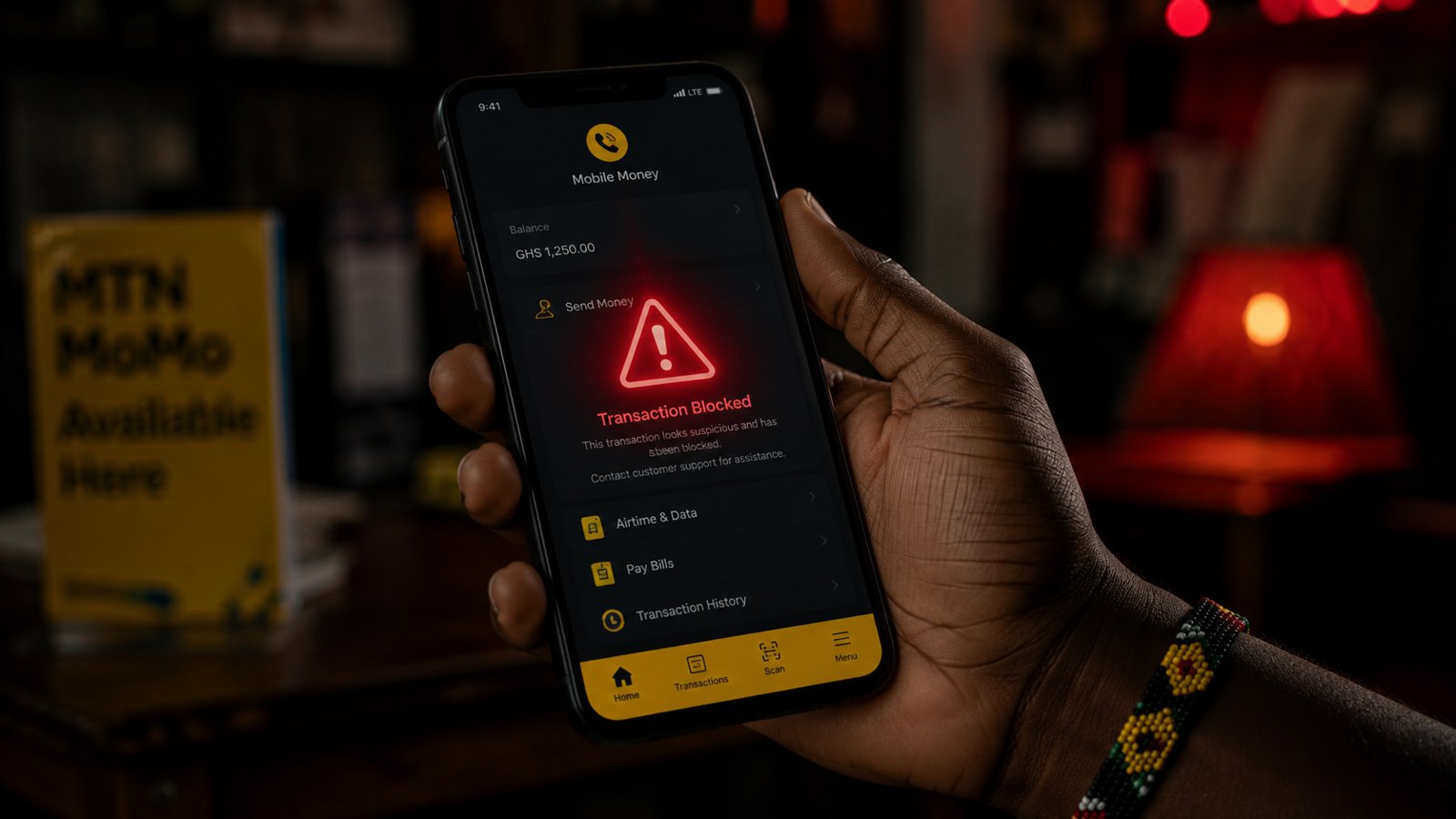
Mobile Money fraud is the most common financial crime targeting ordinary Ghanaians in 2026. According to the Bank of Ghana's Payment Systems Department, MoMo-related fraud losses crossed GHS 78 million in 2025 alone, with the average victim losing between GHS 800 and GHS 5,000 per incident. The scams are not particularly sophisticated. They work because they are quick, convincing, and exploit basic human psychology — urgency, fear, and trust.
This guide breaks down the 10 most active MoMo scam patterns in Ghana right now, exactly how each one works from the criminal's perspective, and the specific defences that stop them.
1. The Mistaken Transfer Reversal Scam
This is the single most common MoMo scam in Ghana, accounting for roughly one in three reported cases. The criminal sends you money — often between GHS 100 and GHS 1,000 — and immediately calls or texts apologising for sending it to the "wrong number." They sound flustered and grateful when you offer to send it back.
Here is what they do not tell you: the original transfer was made from a stolen MoMo account or a SIM that was swap-cloned that morning. When the real account holder reports the fraud, the network reverses the original transfer. But the money you sent back came from your own legitimate account and is gone forever.
2. The Agent Impersonation Scam
A caller claims to be from "MTN MoMo headquarters" or "Vodafone Cash compliance" and tells you there is a problem with your account. They have alarming details — your name, your last transaction amount, sometimes even your ID number — making the call feel legitimate. They ask you to confirm your PIN or read out the verification code they just sent.
No staff member of MTN, Vodafone, or AirtelTigo will ever ask for your PIN or a verification code over the phone. Anyone asking for either is a criminal.
3. The SIM Swap Attack
This one is the most damaging. A criminal collects your personal information — often from social media, lost ID documents, or by impersonating you at a service centre — and convinces a telecom employee to transfer your phone number to a SIM card they control. Your phone suddenly loses network. By the time you reach customer service, the criminal has reset your MoMo PIN, accessed your wallet, transferred everything out, and possibly used your number to compromise your bank account.
4. The Fake Mobile Money Agent
You arrive at what looks like a normal MoMo agent kiosk. You hand over your phone for an over-the-counter cash-out. The "agent" enters the wrong amount on their device — for example, you ask to withdraw GHS 200 but they tap GHS 2,000. By the time you realise, the money is already gone from your wallet and the agent claims it was a "system error" that they cannot reverse.
Always read the transaction prompt on your own phone carefully before approving. Verify the amount and the recipient number every time, especially with unfamiliar agents in non-permanent locations.
5. The Job Offer Registration Fee
A WhatsApp message arrives offering a remote tech job, customer service role, or a position with a real-sounding company. The pay is excellent, the requirements are minimal, and they only ask for a small "registration fee" via MoMo to confirm your slot. Sometimes it is framed as a deposit for a training kit or a uniform.
Legitimate employers in Ghana do not require payment to apply for or accept a job. Any request for money during recruitment — for any reason — is a scam.
6. The Romance MoMo Drain
You meet someone on Facebook, Instagram, or a dating app. The relationship feels real. After weeks or months of warmth, they hit a sudden emergency — a hospital bill, a stranded family member, an unexpected work expense — and ask for help via MoMo. The amounts start small and grow. The relationship is fictional. The "person" may be a scammer in Ghana, Nigeria, or anywhere else, sometimes running dozens of victim relationships simultaneously.
The rule that prevents this category of scam entirely: never send money to anyone you have not met in person, regardless of how convincing the relationship feels online.
7. The Fake Network Upgrade Message
An SMS arrives appearing to be from MTN or Vodafone announcing a "system upgrade" or "wallet verification" that requires you to dial a specific code immediately or your account will be suspended. The code, when dialled, either initiates a transfer from your wallet to the criminal's number, or activates call forwarding that lets the criminal intercept your verification codes.
MTN, Vodafone, and AirtelTigo never ask customers to dial codes to "verify" or "upgrade" accounts. Real network maintenance happens silently in the background.
8. The Investment Platform Scam
A WhatsApp group, Telegram channel, or Facebook page promotes a "guaranteed returns" investment platform. Deposits are made via MoMo. Early returns are paid out to build trust. Friends and family are invited. At a certain point — often when total deposits reach a target — the platform goes silent, the social media pages disappear, and everyone's money is gone.
Recent Ghana examples include the Menzgold collapse (still being investigated), Cassava Marketplace cases, and dozens of smaller forex and crypto schemes. The pattern is identical: guaranteed returns above any legitimate investment, pressure to recruit others, and MoMo as the deposit method to avoid bank traceability.
9. The Fake Pizzaman/Chickenman Order
You see a social media account for a popular Ghanaian food brand offering a special promotion or accepting orders via WhatsApp. You place an order, send the MoMo payment, and never receive food. The page goes dark. Variations involve fake gas dealers, fake water delivery, fake printing services, and any high-trust local brand that does business via WhatsApp.
Always order through the official app, official website, or by calling the official business phone number listed on the brand's verified social media account or physical receipt. If you can find no verifiable contact information, the page is suspect.
10. The Bank Account Reactivation Scam
A call from someone identifying as your bank says your account is about to be deactivated due to recent regulatory changes (often blamed on "the Bank of Ghana's new directive"). They explain you need to "reactivate" your account by sending a small fee — GHS 50 to GHS 200 — via MoMo to a number they provide.
Banks in Ghana do not request MoMo payments to keep accounts active. They communicate through formal letters and through their official mobile apps, never through unsolicited phone calls demanding payments.
The Universal MoMo Safety Rules
Four habits prevent almost every MoMo scam in Ghana:
- Never share your PIN with anyone — not family, not friends, not "agents," not anyone claiming to be from your network. Your PIN is yours alone.
- Verify before sending — read every transaction prompt on your own phone carefully. Confirm the amount and the recipient name before approving.
- Pause when urgent — every scam manufactures urgency. If a situation feels rushed, that is the moment to slow down, hang up, and verify through a separate channel.
- Report immediately — if you fall victim, call your network within minutes. Some transactions can be reversed if reported within the first hour.
Where to Report MoMo Fraud in Ghana
Cyber Security Authority (CSA): 292 (free toll number)
MTN Ghana Fraud Line: 100 → option 5
Vodafone Cash Fraud: 100 from Vodafone or 0501100100
AirtelTigo Fraud: 100 → option 4
Bank of Ghana Financial Stability: +233 302 666 902
You can also check any suspicious message or phone number against known scam patterns using the Ghana Scam Pattern Checker on TechTrendi. The tool reads screenshots of suspicious WhatsApp and SMS messages and flags scam indicators in seconds.